
中国合伙人
Highest-ranking Xia Dynasty noble tombs discovered in China, dating to the age of Minoan Crete_我的网站

一 |
原标题:四川终止地质灾害二级应急响应据央视新闻消息,四川省地质灾害指挥部12日发布决定,于9月12日18时30分终止四川省地质灾害二级应急响应,由应急救援阶段转入恢复重建阶段。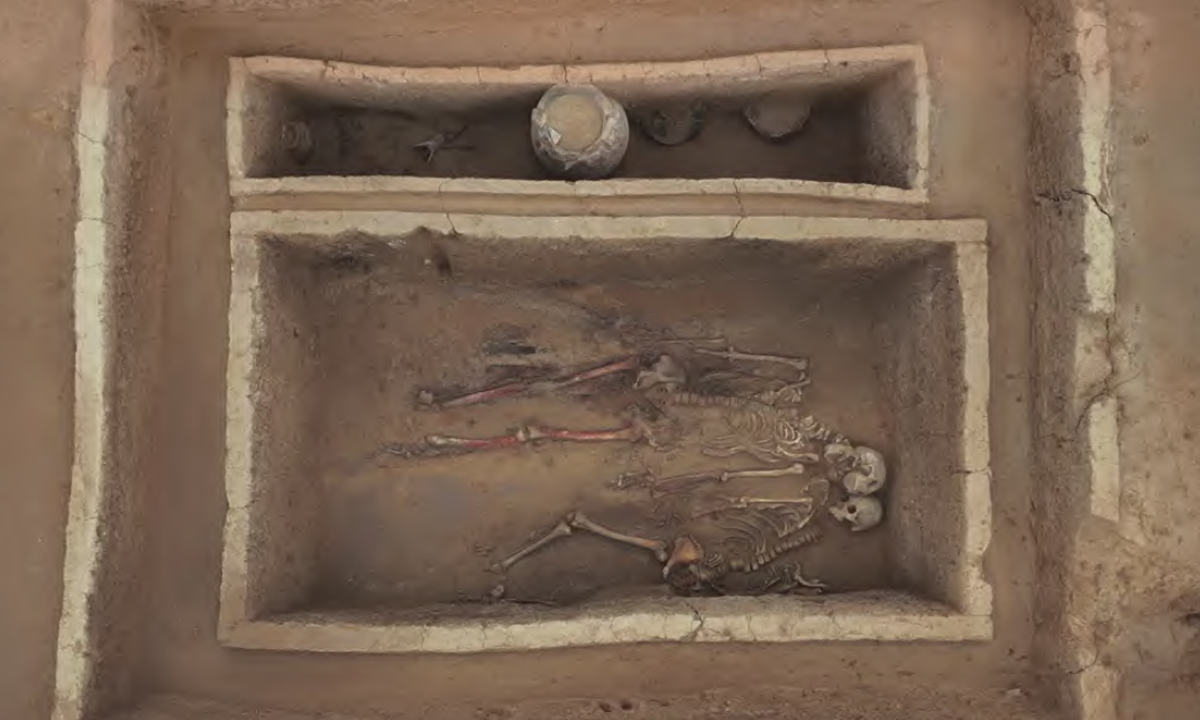
Located on a hilly terrace west of the Taihang Mountains and flanked by the Songxi River, the site was excavated in 2024 and 2025 by the Shanxi Provincial Institute of Archaeology and partner institutions, leading to the discovery of 18 tombs, including six Xia Dynasty burial sites and 12 Warring States Period (475BC-221BC) graves.
"These are the highest-ranking Xia aristocratic tombs discovered so far, indicating that this location was a regional center," the institute said.
The Xia Dynasty is traditionally regarded as China's first hereditary dynasty, though contemporaneous written records are lacking.
The well-organized Xia tombs, concentrated in the western part of the cemetery, feature uniform east-west oriented vertical earthen pits. Researchers recovered nearly 40 sets of artifacts with distinctive local cultural characteristics, including pottery, lacquerware and turquoise ornaments.
Extended regional surveys across the Songxi River valley yielded more than 10 Xia and Shang period sites. Test excavations at nearby relic sites unearthed pottery fragments, stone tools, bronze knives, as well as tin-bronze ingots and smelting residue, providing solid evidence of early metal mining and craftsmanship.
Local copper-iron symbiotic ore deposits confirm exploitation of these resources during the Xia and Shang eras, while typical cultural artifacts found in adjacent counties reveal widespread regional cultural exchange.
Multidisciplinary analyses further decoded the civilization's features. Ancient human remains belong primarily to the ancient population of the Central Plains with minor Mongolian Plateau genetic traits, forming a stable patrilineal clan. The community relied on millet farming and maintained long-distance resource trade networks.
Artifact provenance tests trace scallop shell ornaments to the Bohai Sea, cinnabar to Hunan-Guizhou ore belts, turquoise to the eastern Qinling Mountains area, and coffin timber to local Taihang pine trees. Such diverse materials reflect close interaction among the Taihang foothills, the press release noted.
Lab restoration unveiled refined ritual relics, including a dragon-patterned lacquer cylinder with red and black stripes and an intact lacquer gu vessel (a type of wine vessel). Turquoise plaques from the site match specimens from the Erlitou site, a core Xia cultural relic, proving cross-regional cultural interaction. Radiocarbon dating places the site's active period between 1880BC and 1450BC, aligning with the late Xia Dynasty.
Scholars confirmed the findings have helped reshape academic understanding of Xia-Shang civilizations and reconstruct multi-level settlement patterns on the western Taihang foothills, while offering new insights into social complexity and civilization development in early China.
。目前,灾区震后次生地质灾害应急排查处置工作结束,社会秩序基本恢复正常。(总台记者 刘涛)编辑 贾聪聪来源:央视返回搜狐,查看更多责任编辑:
。
二 | 9月5日,甘孜州泸定县发生6.8级地震。四川省地质灾害指挥部随即启动地质灾害二级响应。
Located on a hilly terrace west of the Taihang Mountains and flanked by the Songxi River, the site was excavated in 2024 and 2025 by the Shanxi Provincial Institute of Archaeology and partner institutions, leading to the discovery of 18 tombs, including six Xia Dynasty burial sites and 12 Warring States Period (475BC-221BC) graves.
"These are the highest-ranking Xia aristocratic tombs discovered so far, indicating that this location was a regional center," the institute said.
The Xia Dynasty is traditionally regarded as China's first hereditary dynasty, though contemporaneous written records are lacking.
The well-organized Xia tombs, concentrated in the western part of the cemetery, feature uniform east-west oriented vertical earthen pits. Researchers recovered nearly 40 sets of artifacts with distinctive local cultural characteristics, including pottery, lacquerware and turquoise ornaments.
Extended regional surveys across the Songxi River valley yielded more than 10 Xia and Shang period sites. Test excavations at nearby relic sites unearthed pottery fragments, stone tools, bronze knives, as well as tin-bronze ingots and smelting residue, providing solid evidence of early metal mining and craftsmanship.
Local copper-iron symbiotic ore deposits confirm exploitation of these resources during the Xia and Shang eras, while typical cultural artifacts found in adjacent counties reveal widespread regional cultural exchange.
Multidisciplinary analyses further decoded the civilization's features. Ancient human remains belong primarily to the ancient population of the Central Plains with minor Mongolian Plateau genetic traits, forming a stable patrilineal clan. The community relied on millet farming and maintained long-distance resource trade networks.
Artifact provenance tests trace scallop shell ornaments to the Bohai Sea, cinnabar to Hunan-Guizhou ore belts, turquoise to the eastern Qinling Mountains area, and coffin timber to local Taihang pine trees. Such diverse materials reflect close interaction among the Taihang foothills, the press release noted.
Lab restoration unveiled refined ritual relics, including a dragon-patterned lacquer cylinder with red and black stripes and an intact lacquer gu vessel (a type of wine vessel). Turquoise plaques from the site match specimens from the Erlitou site, a core Xia cultural relic, proving cross-regional cultural interaction. Radiocarbon dating places the site's active period between 1880BC and 1450BC, aligning with the late Xia Dynasty.
Scholars confirmed the findings have helped reshape academic understanding of Xia-Shang civilizations and reconstruct multi-level settlement patterns on the western Taihang foothills, while offering new insights into social complexity and civilization development in early China.
。目前,灾区震后次生地质灾害应急排查处置工作结束,社会秩序基本恢复正常。(总台记者 刘涛)编辑 贾聪聪来源:央视返回搜狐,查看更多责任编辑:
Current article:http://fuvirn.miaorediancuisuilianzouguang.cyou/list_je2n/422mmp.html
Published on:22:44:23
 中石油多名贪官,竟被一个“包工头”骗得团团转!
 厄瓜多尔总统抵蓉
 台风“梅花”逼近 舟山70条水上客渡运航线全线停航_客运_船舶
 2025“最长618”:硝烟散去,生态竞合
 奋进强国路 阔步新征程丨432公顷土地“生态修复” 百年矿坑“绿色蝶变”
 风雨无阻 幸运加倍!7星彩700万元赠票活动火热进行中~
我的网站最新内容
- ·30万内最具性价比的大型SUV?深蓝S09五款配置该如何选
- ·丰泰基奥一年底薪留守热火:外面的报价一无所知
- ·预计2028年建成!国际零磁谷这一重点项目开工
- ·华安基金:创业板50指数聚焦四大新质生产力赛道
- ·Severe Drought Causing Ruins of Ancient Roman Bridge Built Under Nero's Reign to Reemerge From Tiber
- ·国家防总、应急管理部将针对河南的防汛四级应急响应提升至三级
- ·今天厦门全市依然有暴雨 明天雨势略小
- ·你敢信?全中国连夜排队买票,就为了看一部烂片
- ·太空圈地,中美万颗卫星竞速中的确定性机
- ·造型彰显黄河意蕴 济南黄河体育中心体育馆加速打造城市文体新地标
- ·育碧《魔法门之英雄无敌 3 重制版》游戏《上古起源》官宣,已上架 Steam
- ·白雪姫ではなく…「世界で一番美しいのは雪平姫です」鏡越しの視線にファンうっとり
- ·お金が残る家が、最初に捨てるもの5つ
- ·正虹科技:上半年营业收入5.69亿元,同比增长14.19%
- ·辽宁省三个先进制造业集群入选“国家队”
- ·詹姆斯底薪投城,NBA从ALL IN超巨迈入“强运营时代”
我的网站热点内容
- ·把地沟油变为航油,这家公司做到了!| 1109 张博划重点
- ·总理Christopher Luxon形象被恶搞 用于色情网站宣传
- ·2026豫台经贸洽谈会在鹤壁举行
- ·八月迎好运!“喜相逢20元”游戏千万赠票火热派送中
- ·Sreeleela Takes a Stand Against AI Misuse, Deepfake
- ·超670亿元,资金持续加仓
- ·长时间戴耳机的后果有多严重?韩国一项调查显示,17%的青少年报告听力损失。
- ·Maharashtra: प्रेमिका को इंस्टाग्राम पर मैसेज कर रहा था एक लड़का, प्रेमी ने कर दी पीट-पीटकर हत्या
- ·坂本花織がつくり出した“平和な一枚”に中国メディア賛辞「これは忘れられない」引退撤回を求める声も【冬季五輪】
- ·RTX 5060 显卡“换芯”:GB205 核心版曝光,性能基本持平
- ·Esports Nations Cup 延期至 2027 年 11 月
- ·霍里:范弗里特回归会给火箭带来很大不同 斯玛特也是出色领袖
- ·区妇联开展在职党员进社区活动
- ·爆冷击败王楚钦后,前国乒选手社媒全部清空
- ·Weather: बारिश, बाढ़ और भूस्खलन से कई राज्यों में हाहाकार, यूपी से लेकर तेलंगाना तक पानी-पानी; अभी राहत नहीं
- ·环球问策·第四期 消费工业